
Becker’s 11th Annual IT + Revenue Cycle Conference brought more than 2,500 executives, 600 hospital and health system speakers, and 190 sessions to Chicago this September. For dotCMS, it was a chance to spend a few days talking directly with healthcare leaders about the digital challenges sitting behind patient engagement: discoverability, governance, accessibility, and the growing role of AI.
Events have become an important part of how we bring dotCMS in front of leaders in regulated industries. This year, we’ve joined conversations at the IDC AI & Data Summits in Toronto and New York, the Financial Brand Forum in Las Vegas, Content Marketing World in Denver, and now Becker’s in Chicago. Each event gives us something we cannot get from a dashboard or a research report: candid, face-to-face conversations about what teams are struggling with, what they are prioritizing, and where their current technology is falling short.
Becker’s was our first healthcare-specific event of the year, so we came with a simple goal: listen. I attended with Ryan Picchini, our CRO, and Laura Cabrerizo, our Senior Solutions Engineer and Architect. We kept the booth intentionally straightforward — quick demos, real questions, and no over-scripted pitch. What stood out almost immediately was how strongly our message around governance, compliance, and scale resonated with the people we met.
And across dozens of conversations, one theme came up more than any other: capturing the patient population starts with making sure patients can actually find you.
What we learned
Patients are not waiting until they are ready to book an appointment to start forming an opinion. They are searching for symptoms, providers, specialties, locations, and care options across Google, maps, review sites, and increasingly AI-powered search. If a health system is not visible, accurate, and easy to understand in those moments, it may never make it into the patient’s consideration set at all.
That makes brand discoverability much more than an SEO problem. Many of the organizations we spoke with manage large portfolios of hospital, clinic, specialty, and service-line sites, each with its own content, location information, provider data, and publishing process. When those experiences fall out of sync, the issue is not only operational. Search engines and AI tools see inconsistent signals, and patients see an inconsistent brand.
Accessibility is part of that same trust equation. Teams told us they want to catch accessibility issues while content is being created, not months later during an audit. For healthcare organizations serving broad and diverse patient populations, accessibility is not simply a compliance requirement; it directly shapes whether someone can find, understand, and act on the information in front of them.
AI came up in nearly every conversation as well, but rarely as a question of whether healthcare organizations should use it. The more pressing question was how to use it without weakening the review processes already in place. Healthcare content is often subject to clinical, legal, regulatory, and brand oversight, and leaders are looking for ways to accelerate that work without bypassing those controls.
The consistent message was simple: use AI to help teams move faster, but keep accountability intact. Human review still matters. Approval still matters. And organizations need to know exactly what changed, who approved it, and what ultimately reached the patient.
dotCMS for Healthcare
Everything we heard in Chicago maps closely to how dotCMS is built and to the challenges we already help healthcare organizations solve.
It starts with governance. Healthcare teams need to move quickly, but they cannot afford to lose control over who can change content, what requires review, or what ultimately gets published. dotCMS enforces those controls at the platform level through granular permissions, role-based access, SSO, MFA, approval workflows, version history, and full audit trails. Teams can require review before publishing, compare changes side by side, and roll back when needed. Independent validation comes through certifications including ISO 27001, ISO 42001, SOC 2 Type II, and TX-RAMP.
Workflows & Approvals
See content move through review, legal, and compliance approvals with full audit trails.
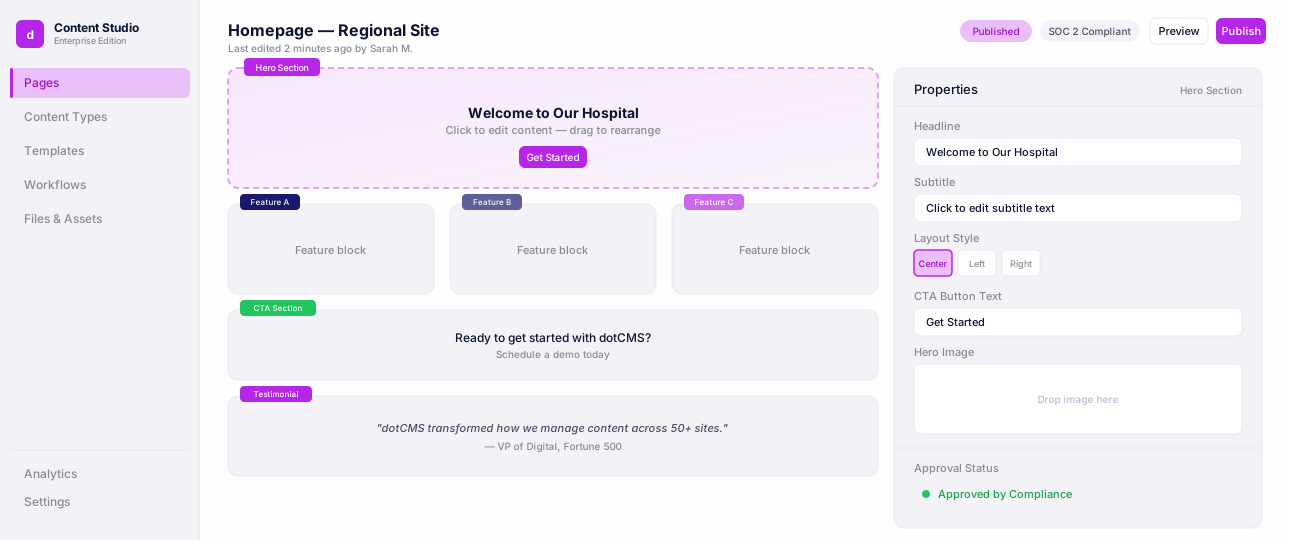
That same foundation becomes especially important at scale. Health systems often manage large portfolios of hospital, clinic, provider, and service-line sites, and dotCMS allows those experiences to be managed from a single instance. New facility sites can be launched quickly, while shared content such as provider information, locations, maps, scheduling, ER wait times, and health advisories can be managed centrally and delivered consistently across the organization. The result is a more consistent digital presence for patients and cleaner, more reliable signals for search engines and AI-powered discovery.
Accessibility is built into that workflow as well. Teams can identify WCAG and ADA issues while content is being authored instead of waiting for a later audit, while medical, legal, and regulatory reviews can still happen before anything reaches production.
For security and IT teams, dotCMS keeps sensitive patient data in the systems already designed to protect it. We manage the content layer, while healthcare organizations retain control over the systems of record behind it. Deployment can also fit the organization’s requirements, whether that means cloud, on-premises, or a managed cloud environment.
AI follows the same governed model. Agents in dotCMS operate within the roles, permissions, workflows, and audit trails already in place. They can support multi-step content work, but they do not bypass the controls that matter. Human approval can still determine what goes live, and every action remains traceable, reviewable, and reversible. Organizations also retain flexibility over the models and environments they choose to use.
That approach has earned outside recognition as well. dotCMS was named a Major Player in the IDC MarketScape: Worldwide AI-Enabled Headless CMS 2025 Vendor Assessment.
If we met you at Becker’s, thank you for the candid conversations and for sharing what your teams are navigating. And if we missed you in Chicago, you can learn more about how dotCMS supports healthcare organizations and see the platform in action at dotcms.com/demo-request/healthcare.